

There is a particular kind of chaos that happens on brownfield sites during a shutdown window.
Someone pulls out the original drawings, the ones from fifteen years ago, and the piping shown on paper does not match what is actually in front of them. A pre-fabricated section arrives from the vendor and it is six inches off from where the flange actually sits. Work stops. The clock is running. Everyone is standing around trying to figure out what happened.
This is not a rare story. It happens constantly across Gujarat’s chemical and processing clusters, in Ankleshwar, Dahej, Surat, and the PCPIR corridor near Bharuch. Plants get modified over years. Undocumented reroutes pile up. Vendors make adjustments on site that never make it back onto the drawings. By the time a capacity expansion or a tie-in project comes around, nobody actually knows what the plant looks like in precise three-dimensional reality.
That is the problem that laser scanning services in Gujarat are solving. Not in a theoretical sense. In a very practical, the-shutdown-window-is-48-hours-and-we-cannot-afford-surprises sense.
What a Laser Scan Actually Captures
Most people who have not worked with it imagine a laser scan as a kind of fancy photograph. It is quite a bit more than that.
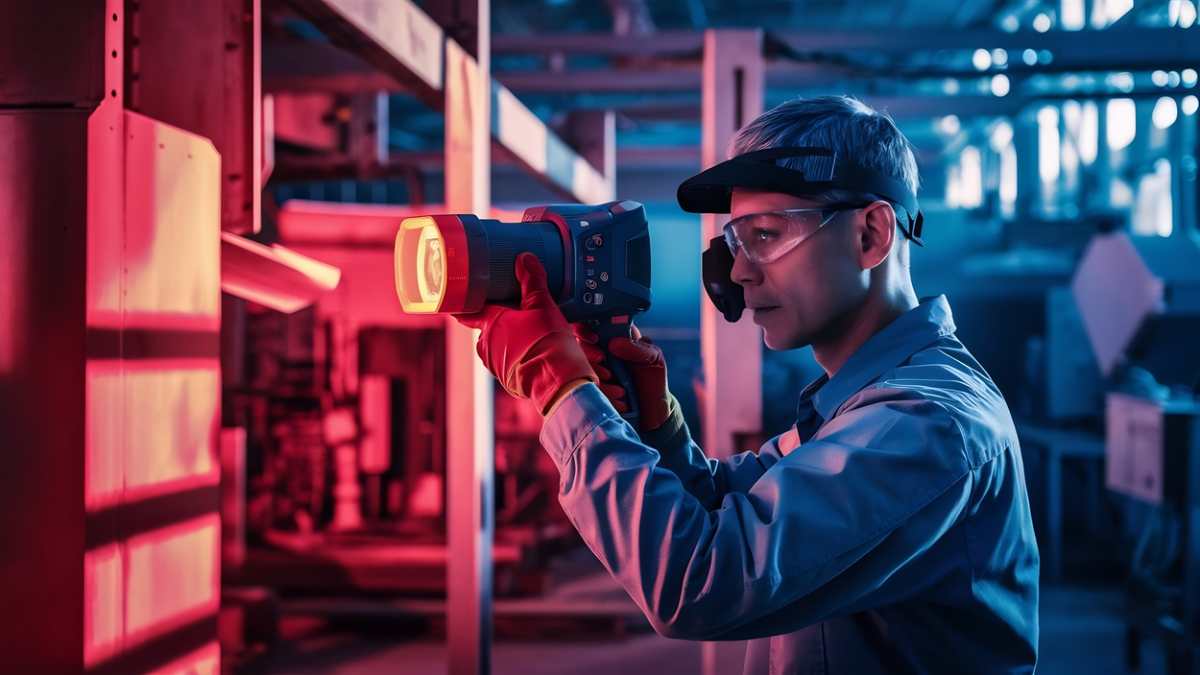
SES Digital deploys terrestrial, handheld and mobile scanners that capture the plant as a dense 3D point cloud. Every pipe, every valve, every cable tray, every support structure, every equipment foundation. The scan picks up pipe centerlines, reducer lengths, valve orientations, and support locations with engineering-grade accuracy. Things you genuinely cannot get from a tape measure and a clipboard.
The raw scan data gets processed through industry software like Autodesk Plant3D, PDMS, and AVEVA E3D into fully usable 3D models. From those models, teams can generate isometrics, GA drawings, 2D floor plans, clash detection reports, and even immersive walkthroughs for planning and training purposes.
The whole site visit, even for a complex facility, usually wraps up in a single trip. That matters in chemical environments where every permit, escort, and safety clearance takes time.
The Real Cost of Skipping It
Plant upgrades without accurate as-built data tend to go the same way. The design looks clean on paper. The fabricated spool arrives on site. Then comes the moment someone holds it up against the existing pipe and realises there is a support bracket directly in the way that was not on any drawing.
That is a rework scenario. And rework during a shutdown is not just expensive in material terms. It burns through time that was already committed to the client, the production schedule, the regulatory calendar. One clash that should have been caught at the design stage can cascade into a 12-hour delay on a plant that was supposed to restart that night.
SES Digital’s laser scanning services produce BIM models that feed directly into clash detection, installation planning, demolition planning, and pre-fabrication verification. The point is to surface those conflicts before anyone is standing on site holding a wrench.
Where Gujarat’s Industries Are Using It
The industrial base in Gujarat runs wide. Chemical processing, agrochemical manufacturing, oil and gas, pigment and specialty chemicals. Each of these sectors runs expansion cycles, tie-in projects, and plant upgrades on a regular basis.
Tie-in work is one of the strongest use cases. When you need to connect a new branch line to an existing pipe, you need to know exactly where that pipe sits. Its height off the ground, its direction, whether there is room for the new connection to be made cleanly. A laser scan confirms all of that before the shutdown begins, so the prefabricated section is cut to actual dimensions, not drawing dimensions.
Expansion planning is another. Whether a new skid is being added or an existing unit extended, having a reliable 3D model of what is already built means the new design fits the reality on the ground rather than the idealised version of it on paper.
Structural validation too. Metering skids, vapor recovery systems, chemical injection skids, many of these come prefabricated and need to land precisely in an existing layout. The scan confirms there are no surprises waiting.
The Difference Engineering Context Makes
A point cloud on its own is just data. What makes it useful is knowing what to do with it.
SES Digital, based in Vadodara, combines laser scanning capability with a background in process engineering, piping design, and plant operations. That combination is not incidental. It means the scan outputs come packaged in formats that design teams, EPC contractors, and plant engineers can immediately work with. Not just accurate geometry but models structured for the specific decisions being made, tie-in validation, fabrication verification, installation sequencing.
That is part of why laser scanning services in Gujarat, when done by a team that understands the industrial environment, produce different results from a generic survey service. The data has engineering intent behind it.
A Small Investment Relative to What It Protects
Commissioning a laser scan before a plant upgrade does cost something. Time for the site visit, processing time, the modelling work. None of that is free.
But weigh it against the alternative. A single rework event during a shutdown can cost several times what the scan would have cost. A clash that forces a redesign mid-installation can set a project back days. And if inaccurate as-built information leads to a pressure line being modified incorrectly, the consequences go beyond money.
The companies across Gujarat that are building laser scanning into their standard pre-project workflow are not doing it because someone sold them a technology. They are doing it because they got burned once without it and decided not to repeat the experience.
If your plant has a capacity expansion, a tie-in project, or a major maintenance window coming up, the conversation with SES Digital is worth having before the drawings go to fabrication. They are reachable at SES Digital Solutions or on +91-7486933588, and they have done this work across the kinds of complex, heavily modified facilities that are common across Gujarat’s industrial clusters.